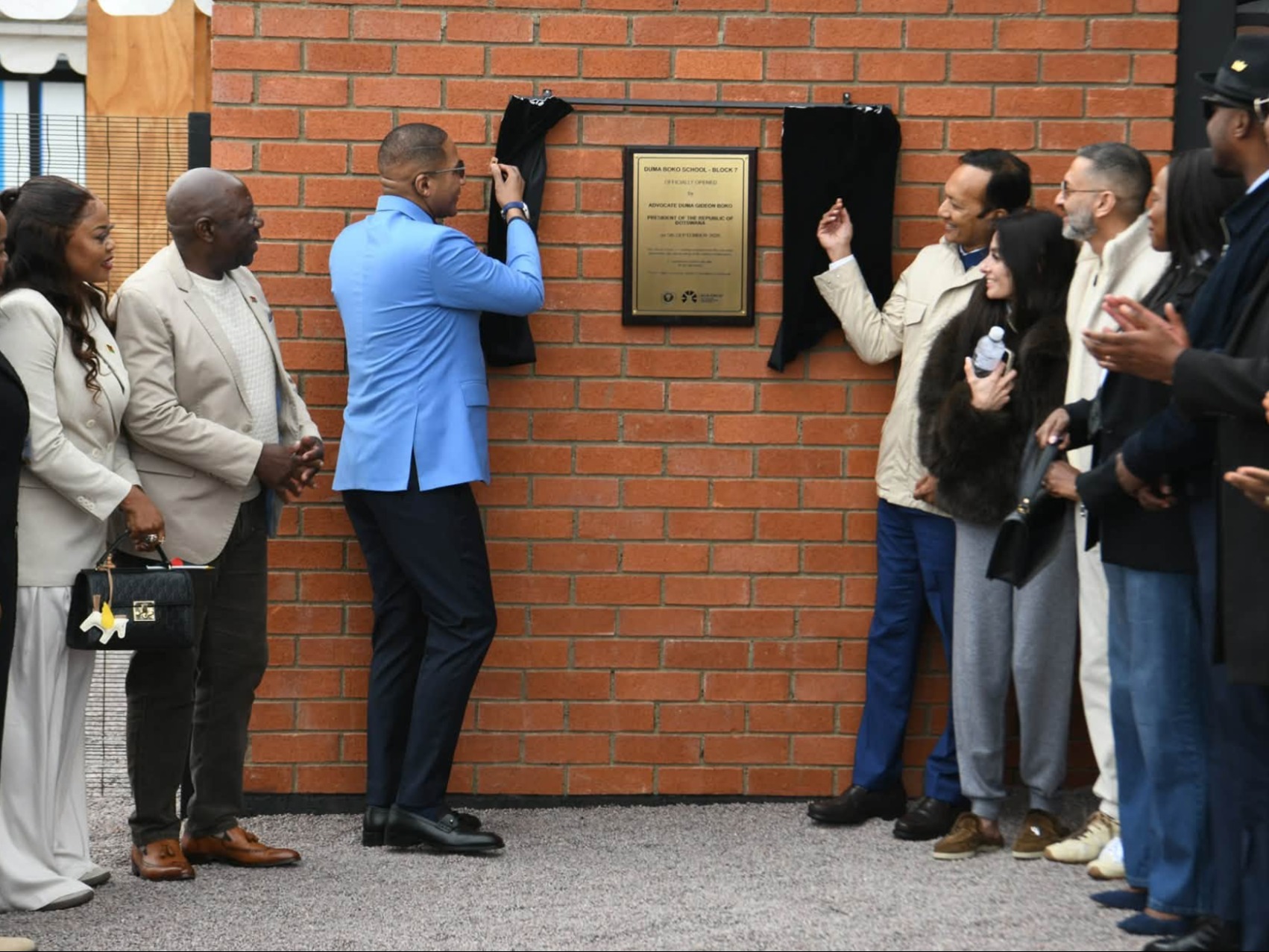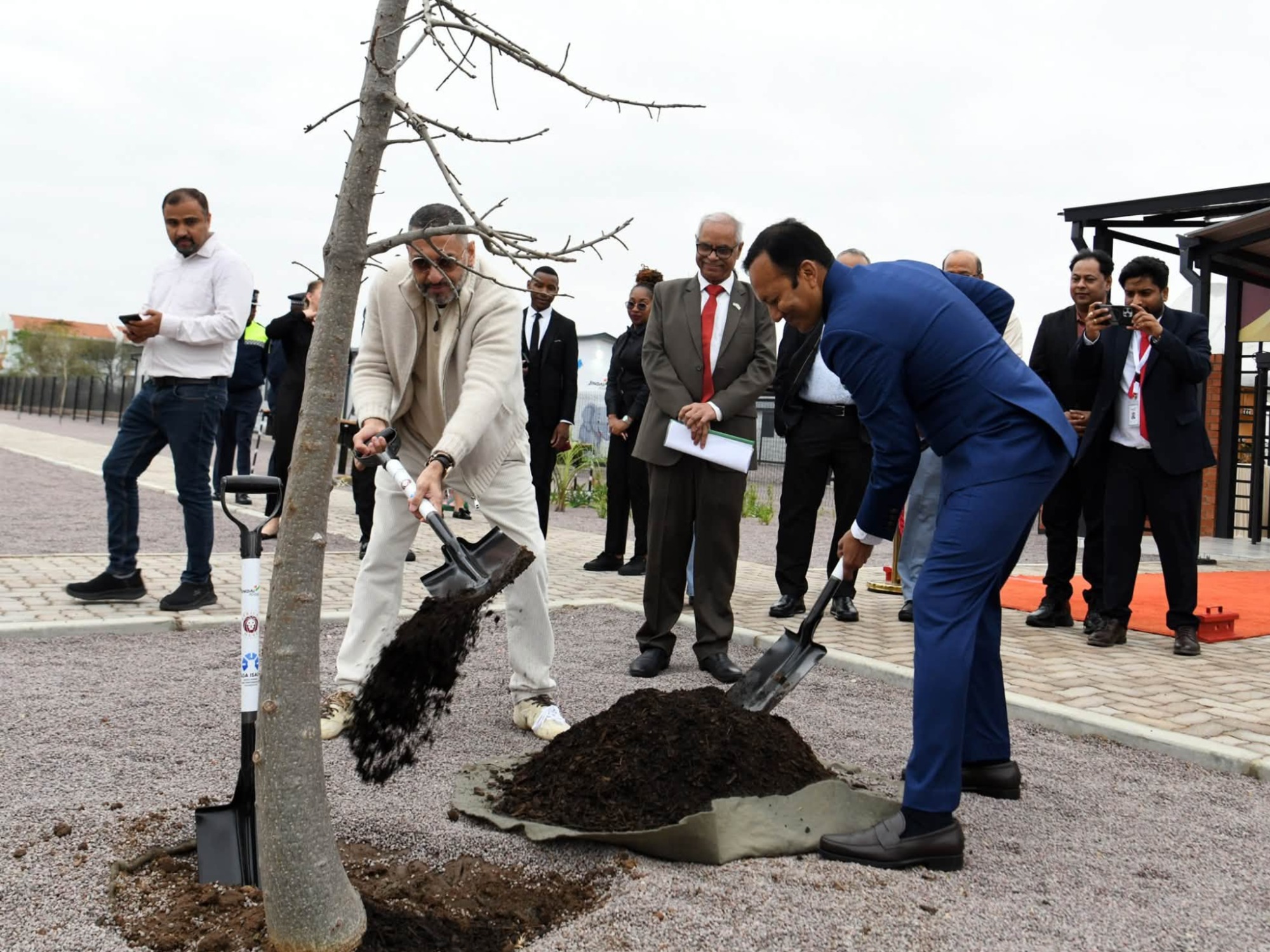
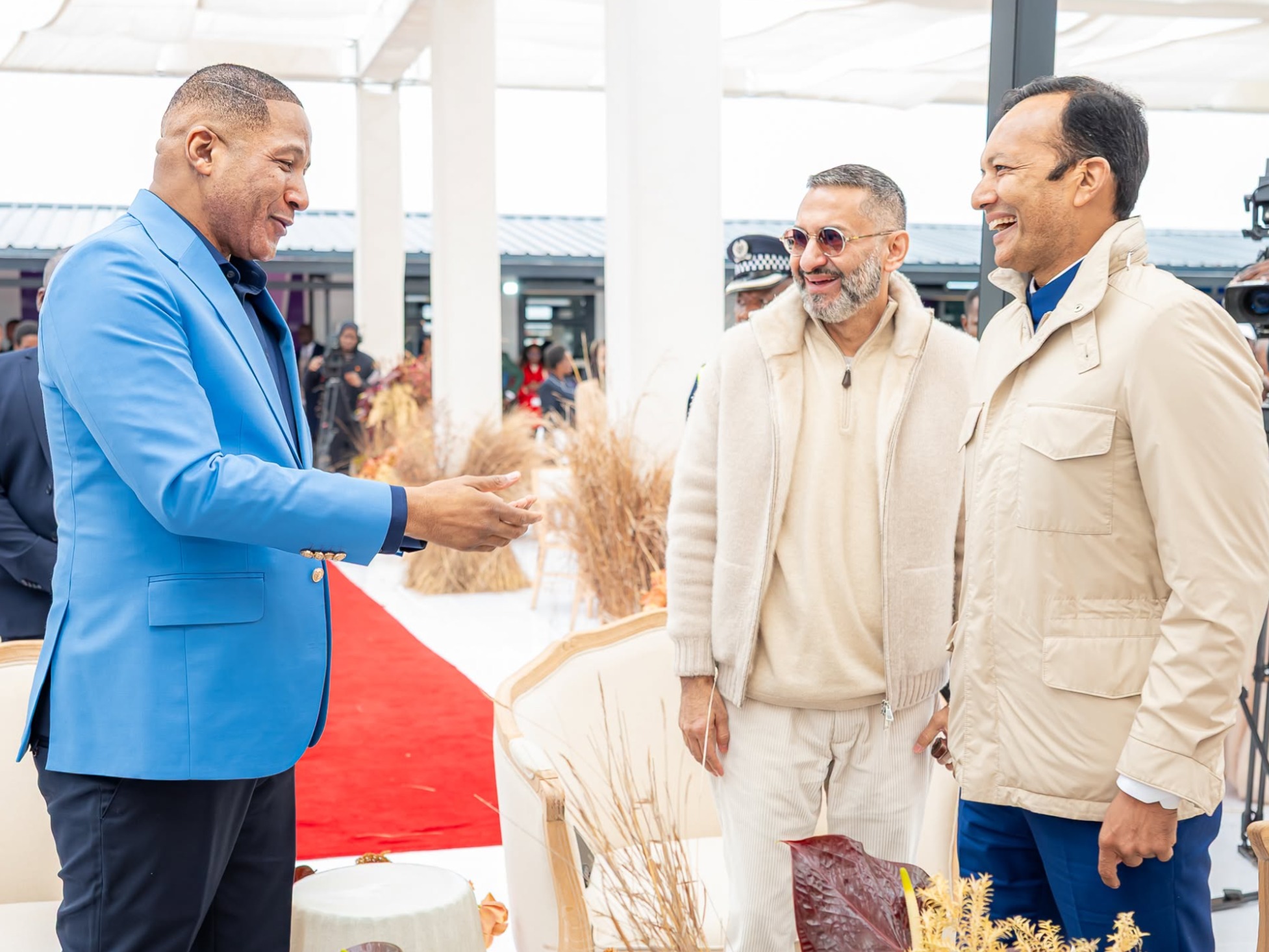
President Duma Boko has launched a new school and clinic in Block 7, Gaborone, marking the first step in an ambitious plan to build 100 schools and 50 clinics across Botswana.
The Duma Boko School and Clinic, unveiled on Saturday, was built under the African Hero initiative established by South African businessman Zunaid Moti, with financial support from Jindal Power.
The primary school is expected to enrol about 380 learners, while the clinic has been designed to attend to as many as 288 patients a day once it is fully staffed and operational.
Government provided the land but did not pay for construction. It will now take responsibility for running the facilities, including providing teachers, health workers and medicines.
Boko said the land had been reserved for a school for more than 20 years but remained undeveloped because government did not have the money to build on it.
“How much did government spend in the building of this school? Nothing,” Boko said.
He described the development as proof that government could work with private investors and philanthropists to deliver public infrastructure faster.
“This school and this clinic is proof of concept,” he said.
The President, however, admitted that construction did not move as quickly as initially planned. The school was supposed to be completed within a month but took four months because of inspections, licences and other delays.
Boko said the experience would be used to improve the delivery of other schools and clinics planned under the initiative.
Jindal Power chairman Naveen Jindal, whose company financed the pilot, said the company was proud to support the project.
African Hero has said Jindal’s contribution was not backed by a government guarantee. It also insists that the company will not receive preferential treatment in government tenders or any other state benefit in return for financing the school and clinic.
Moti said the African Hero idea grew out of a personal commitment he made in 2018 to give back to communities by improving access to education and healthcare.
He credited Boko with being the first leader to embrace the idea.
“The first man that came to the assistance and put his hand up first around education and health care amongst us was Duma Boko,” Moti said.
He said African Hero wanted to move away from a system where contractors were paid before projects were completed, only for some developments to stall or remain unfinished.
“We deliver and then we receive payment,” he said.
According to Moti, payment could be made immediately after delivery or spread over five, 10 or even 20 years, depending on the agreement with a government, donor or sponsor.
His remarks, however, leave unanswered questions about how the proposed 100 schools and 50 clinics in Botswana will be paid for.
An earlier proposal for an investor to build schools and clinics and lease them to government was rejected by the Ministry of Finance. Permanent Secretary Tshokologo Kganetsano told the Public Accounts Committee that its financial implications were too high and that government preferred open competitive bidding.
No agreement covering the full rollout of the 150 facilities has been made public.
At the centre of African Hero’s expansion plans is AfriForge, a proposed manufacturing plant in Gabane estimated to cost P2 billion.
The plant will manufacture prefabricated panels and other materials needed to assemble schools and clinics. Boko said Botswana could eventually produce components for about one clinic every hour and export facilities to other African countries.
Malawi has already expressed interest in the model and sent Second Vice President Enock Chihana to attend the launch.
Boko said he had insisted that Batswana should be trained and employed at the Gabane plant. He said an agreement on training and employment had been reached, although it was yet to be formalised.
The project also comes with a maintenance plan. Technical personnel are expected to be based near the facilities so that broken equipment and other faults can be attended to without the long delays common at public buildings.
The naming of the school and clinic after the sitting President has attracted criticism, particularly because African Hero also describes Boko as its founding chairman.
Boko said those who financed the project held the naming rights and chose to name the first facilities after him because he was the first leader to back the initiative.
Tswapong South legislator Dr Kesitegile Gobotswang has called on government to disclose the full terms of its relationship with African Hero, Jindal Power and the Aga Isago Development and Empowerment Foundation.
Moti’s previous financial support for the UDC’s 2019 General Election campaign has also added to questions surrounding the project.